Accelerating Cruise Ship Customs Clearance in Remote Alaska Ports
Field process improvement under operational constraints.
Note: Case studies shown are a combination of Northern Analysis engagements and professional projects from our founding team’s careers. No confidential, proprietary, or sensitive information is disclosed. Certain details may be generalized or omitted to protect client, employer, and stakeholder confidentiality.
Summary
When a cruise ship arrives in the United States from an international port, U.S. Customs and Border Protection must inspect and clear all passengers and crew before the vessel can depart. In remote Alaska ports, this process relies on paper records reconciled against a printed manifest — which may run nearly 100 pages.
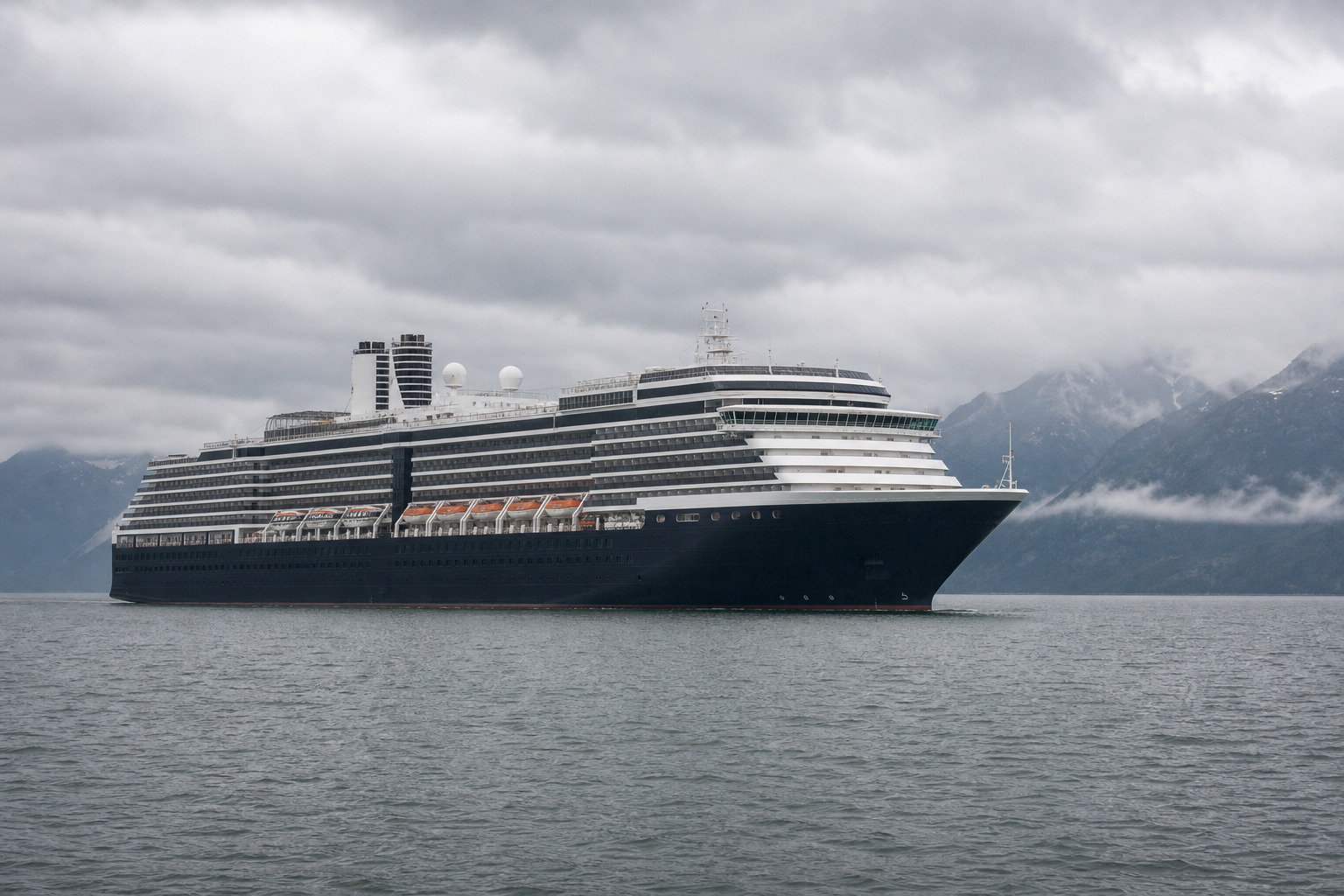
Arnav served as the contracted operations manager for a Holland America vessel arriving in Kodiak from Asia with 2,500 passengers and crew, with manual reconciliation across that manifest creating substantial time loss and accuracy risk. The field environment ruled out a complex solution: CBP’s inspection process could not be altered, no outside system could be connected or deployed, and there was no time to train officers on new tools. The solution had to be easily approvable, deployable immediately, and produce output that met CBP federally regulated clearance requirements. Arnav converted the manifest into a searchable digital spreadsheet and logging system structured to match CBP’s required clearance log. He obtained field approval from CBP to use it and administered the system alongside officers during the vessel’s clearance. The result was a 30% reduction in clearance time and a departure several hours ahead of what the paper process would have allowed. For a large cruise ship, this substantially reduced the risk of additional fuel expenses and sailing schedule disruptions.
Situation
The vessel arrived in Kodiak requiring full CBP inspection with no preclearance from the port of origin. The standard process required officers to stamp each passenger’s documents, maintain paper inspection records, reconcile those records against the vessel’s printed manifest, and prepare the final clearance log required before departure.
For a vessel carrying 2,500 passengers and crew, the scale of the paper process created an operational bottleneck. The manifest ran nearly 100 pages. Each time an officer needed to locate a passenger record, verify a detail, log a status, or resolve a discrepancy, the record had to be found manually. Across thousands of inspections, that manual lookup created substantial time loss after the inspection and increased the risk of transcription errors in the final clearance log.
The field environment also placed firm limits on what kind of solution was possible. CBP’s inspection authority and official process could not be changed. The tool could not connect to CBP systems because of IT and security restrictions, and CBP could not deploy a new system without a lengthy agency approval process. There was no time to train officers on new software or procedures. Any solution had to be approved in the field, deployed immediately, and produce output in the exact format the agency used.
Solution
Arnav converted the vessel’s manifest into a spreadsheet structured to match CBP’s required final clearance log. He collaborated with CBP to obtain approval, and used the spreadsheet as the working inspection record and clearance-log format for the port call.
No new process or unfamiliar format was introduced. The spreadsheet followed the document CBP already needed but made that document searchable and able to register digital entries. As officers stamped passenger documents, the records were brought to the system, located by search, and digitally logged. Citizenship status, inspection status, and exceptions could be entered against the correct manifest record in real time.
The simplicity was a key aspect of the solution. A more complex tool would have required approval, training, and time. This solution worked because it incorporated the difficult operating environment: a remote port, a large passenger count, a federal inspection process, no system integration or deployment, and a hard departure schedule.
Results
The solution shortened the cruise ship’s clearance time by 30% and allowed the vessel to sail several hours earlier than the existing process would have allowed. It reduced transcription risk, accurately identified passengers and crew whose inspection status required officer follow-up, and ensured a more accurate reconciliation.
These results were accomplished with a tool that required no training, no complex systems deployment, and no change to the federally regulated inspection process. The lack of technical complexity allowed the solution to work in real time in a situation where operational constraints prevented the deployment of anything modern or complex.